
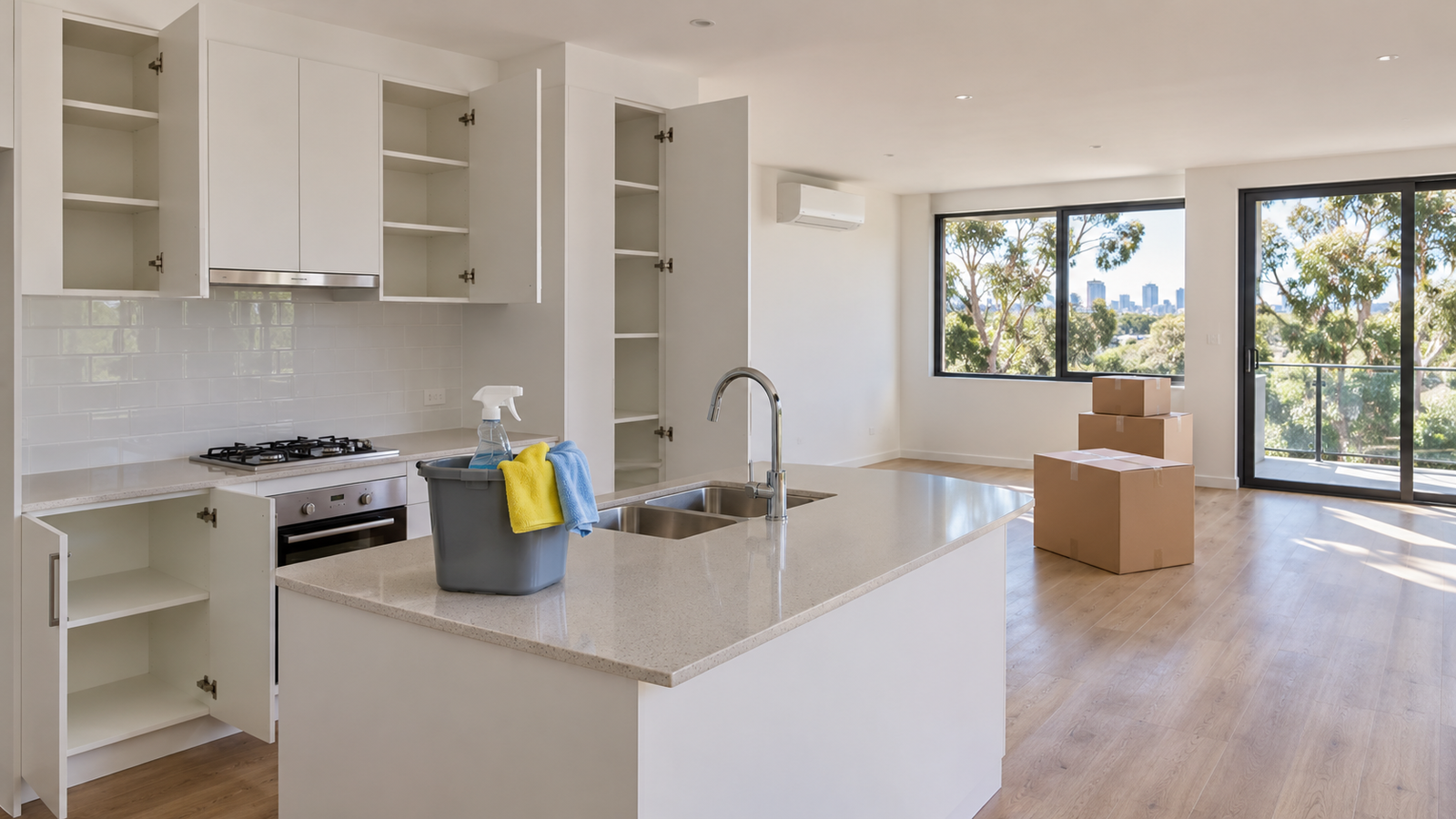
The best time to clean a rental is before your furniture is in it. Every cupboard is empty, every floor is clear, and anything you find can still go on the condition report. This checklist covers what NSW rules say about the state of the property, what to record before you touch anything, and what to clean room by room.
What the landlord has to hand over
In NSW, landlords must provide rental properties that are in a reasonable state of cleanliness and fit for the tenant to live in (NSW Government: Minimum standards for rental properties). “Reasonable” is not the same as spotless, which is why many renters still clean before they unpack.
Step 1: Do the condition report before you clean
The landlord or agent must fill out a condition report before you move in and give you two paper copies or one electronic copy. Your part, according to the NSW Government (Rental property condition reports):
- Complete your section of the report
- Take photos to go with it, with time stamps
- Return one completed copy to the landlord or agent within seven days of moving in
- Keep the other copy
All damage, including minor damage, should be noted. The NSW Government says the more detail a report has, the less likely a dispute is at the end of the tenancy. So photograph the dirty oven, the marked wall and the stained carpet first, write them on the report, and only then start cleaning. This report is what your agent compares against when you move out and claim your bond.
Step 2: If the property is not clean
Write it on the condition report, photograph it, and tell your agent in writing. For help with a tenancy problem, NSW Fair Trading is on 13 32 20.
Step 3: Clean room by room
Work from the top of each room down, and from the back of the home towards the front door.
Kitchen
- Inside every cupboard and drawer, including the shelf edges
- Oven, grill and stovetop
- Rangehood and its filters
- The fridge space and the floor under it
- Dishwasher filter and door seals
- Sink, taps and benchtops
Bathrooms
- Toilet, including the base and behind it
- Shower screen, tiles and grout
- Vanity drawers and the mirror cabinet
- Exhaust fan cover
- Floor drains
Bedrooms and living areas
- Inside wardrobes, including the top shelf and tracks
- Skirting boards and window sills
- Window tracks
- Light switches and door handles
- Vacuum carpets and mop hard floors last
Laundry and entry
- Laundry tub and cupboard
- The space where the washing machine goes
- Front door, handle and entry floor
Step 4: Decide who does it
You can do all of this yourself. If you would rather start unpacking, book a move-in clean for the gap between collecting the keys and the removalist arriving. If the home has been empty for a while or needs more than a surface clean, a deep clean covers the built-up areas. Moving into a new build? Read what a builder’s clean is.
Every job is quoted at a fixed price.
Leaving your old place? Read how to get your full bond back in NSW and the NSW bond cleaning checklist, or book end of lease cleaning.
FAQ
Does a landlord have to clean before a new tenant moves in?
NSW landlords must provide a rental property in a reasonable state of cleanliness and fit to live in.
How long do I have to return the condition report in NSW?
Return one completed copy to the landlord or agent within seven days of moving in, and keep the other copy.
Should I clean before or after filling in the condition report?
After. Record and photograph the property as you found it first, so the report shows its real condition.
Do I need photos with my condition report?
The NSW Government says tenants should take photos to go with the report, with time stamps showing when they were taken.
What is the difference between a move-in clean and an end of lease clean?
An end of lease clean is arranged by the tenant who is leaving, before the final inspection. A move-in clean is for the person arriving, before they unpack.